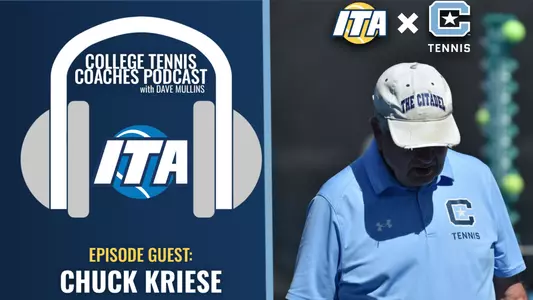
Kriese Reflects on Coaching Philosophy & The Citadel Experience -- via ITA Podcast
3/13/2026 9:15:00 AM | Tennis
CHARLESTON, S.C. – The Citadel tennis head coach Chuck Kriese recently appeared on the ITA College Tennis Coaches Podcast, hosted by Intercollegiate Tennis Association CEO Dave Mullins. The podcast features conversations with influential coaches across the sport and focuses on coaching philosophy, player development and the evolving landscape of collegiate tennis.
During the episode, Kriese reflected on his decades-long career while also sharing insight into his time leading the program at The Citadel and the values that guide his approach to coaching.
Kriese has spent nearly five decades in college tennis, and the veteran coach said his return to the sport at The Citadel provided an opportunity to coach in an environment where his values and philosophy align.
Kriese, who has led the Bulldogs' tennis program since 2013, describes The Citadel as a place where young men are developed through discipline, accountability and structure. The environment emphasizes daily habits and the process of improvement as much as competitive results.
"The Citadel is a tremendous place to work," Kriese said. "It provides structure and accountability, and they learn discipline that lasts a lifetime and the importance of doing the right things at the right time."
The longtime coach has built championship teams, developed professional players and authored books on the game, but at The Citadel, he says the mission feels different.
"I'm coaching for a whole different reason now than I did earlier," he added. "It's the journey and the process. They teach process, process, process."

A Career Built on Development
Before arriving at The Citadel in 2013, Kriese spent 33 years at Clemson University, where he became the winningest coach in ACC history with 685 victories. He developed All-Americans, national players of the year and future ATP competitors while also helping launch the coaching careers of many former players.
"I loved college coaching from the first day that I've ever done it," Kriese said. "I loved being there. The amount of players that went on to coach themselves, most of the players stayed in tennis, and I'm very proud of that."
After leaving Clemson, Kriese worked internationally as a national coach and continued to teach and study the game. When he returned to the collegiate level, it was not to chase wins, but rather to teach.
"I've always wanted to coach," he noted. "I knew it growing up in Indiana playing basketball. I wanted to coach high school basketball. That was my dream."

Process Over Results
At The Citadel, Kriese found an environment where the structure of the institution naturally supports many of the principles he has emphasized throughout his career, including discipline, accountability and consistency.
"The focus here is on what you do every day," Kriese said. "If you commit to the process and do the right things consistently, the results will take care of themselves."
Kriese views his role as more than simply coaching tennis. He approaches the position as a teacher and mentor, helping young men learn how to compete the right way while developing habits that extend beyond the court.
"They love when young men come through and do what they do," Kriese said. "It gives them honor and respect at this time in their life for the journey."
For Kriese, that emphasis on daily habits and personal accountability is a key part of the experience at The Citadel, where the environment encourages student-athletes to stay focused on the work required to improve each day.

Teaching Through Tennis
Though he has coached at the highest levels, Kriese has always believed that tennis is a vehicle for something bigger.
"Honor the game, and it will honor you," he said. "You respect everything about it, and that's what you have to do to be a tennis player, not just someone who plays tennis."
He emphasizes that the best players he has coached are the ones who develop an internal standard for themselves.
"The best players hate losing and love winning," Kriese added. "That competitive edge is what drives them to improve and hold themselves to a higher standard."
He also talks about helping players move from simple compliance to genuine ownership of their development.
"Compliance you can get from a dog or a cat," he concluded. "Commitment is a step beyond that. Then you want inspired enthusiasm where players truly care about improving. The final step is when they start seeking answers on their own and taking ownership of their development."

Building Men, Not Just Players
Throughout his career, Kriese has emphasized that tennis is only part of the experience for the student-athletes he coaches. The larger goal is helping players develop habits and values that extend beyond the court.
At The Citadel, that philosophy aligns closely with the institution's mission of developing principled leaders. The structure and expectations of the environment reinforce many of the same principles Kriese has emphasized for decades, including discipline, accountability and personal responsibility.
"It's about helping young men grow and learn how to handle challenges the right way," Kriese said. "Tennis gives them an opportunity to develop those habits every day."
For Kriese, the lessons learned through practice, preparation and competition are meant to last well beyond a player's collegiate career. While results remain important, he believes the greatest impact comes from the growth that takes place along the way.

A Legacy Of Teaching
After nearly five decades in the game, Kriese remains energized by the work, the practices and the conversations that shape young lives.
"I'm not coaching for the same reasons I was before," he said. "It is the journey, the process and the daily work that matters most."
At The Citadel, that philosophy continues to shape the program and the student-athletes who come through it.
To hear the full conversation with Chuck Kriese on the ITA College Tennis Coaches Podcast, listen via the embedded link below.
During the episode, Kriese reflected on his decades-long career while also sharing insight into his time leading the program at The Citadel and the values that guide his approach to coaching.
Kriese has spent nearly five decades in college tennis, and the veteran coach said his return to the sport at The Citadel provided an opportunity to coach in an environment where his values and philosophy align.
Kriese, who has led the Bulldogs' tennis program since 2013, describes The Citadel as a place where young men are developed through discipline, accountability and structure. The environment emphasizes daily habits and the process of improvement as much as competitive results.
"The Citadel is a tremendous place to work," Kriese said. "It provides structure and accountability, and they learn discipline that lasts a lifetime and the importance of doing the right things at the right time."
The longtime coach has built championship teams, developed professional players and authored books on the game, but at The Citadel, he says the mission feels different.
"I'm coaching for a whole different reason now than I did earlier," he added. "It's the journey and the process. They teach process, process, process."
A Career Built on Development
Before arriving at The Citadel in 2013, Kriese spent 33 years at Clemson University, where he became the winningest coach in ACC history with 685 victories. He developed All-Americans, national players of the year and future ATP competitors while also helping launch the coaching careers of many former players.
"I loved college coaching from the first day that I've ever done it," Kriese said. "I loved being there. The amount of players that went on to coach themselves, most of the players stayed in tennis, and I'm very proud of that."
After leaving Clemson, Kriese worked internationally as a national coach and continued to teach and study the game. When he returned to the collegiate level, it was not to chase wins, but rather to teach.
"I've always wanted to coach," he noted. "I knew it growing up in Indiana playing basketball. I wanted to coach high school basketball. That was my dream."
Process Over Results
At The Citadel, Kriese found an environment where the structure of the institution naturally supports many of the principles he has emphasized throughout his career, including discipline, accountability and consistency.
"The focus here is on what you do every day," Kriese said. "If you commit to the process and do the right things consistently, the results will take care of themselves."
Kriese views his role as more than simply coaching tennis. He approaches the position as a teacher and mentor, helping young men learn how to compete the right way while developing habits that extend beyond the court.
"They love when young men come through and do what they do," Kriese said. "It gives them honor and respect at this time in their life for the journey."
For Kriese, that emphasis on daily habits and personal accountability is a key part of the experience at The Citadel, where the environment encourages student-athletes to stay focused on the work required to improve each day.
Teaching Through Tennis
Though he has coached at the highest levels, Kriese has always believed that tennis is a vehicle for something bigger.
"Honor the game, and it will honor you," he said. "You respect everything about it, and that's what you have to do to be a tennis player, not just someone who plays tennis."
He emphasizes that the best players he has coached are the ones who develop an internal standard for themselves.
"The best players hate losing and love winning," Kriese added. "That competitive edge is what drives them to improve and hold themselves to a higher standard."
He also talks about helping players move from simple compliance to genuine ownership of their development.
"Compliance you can get from a dog or a cat," he concluded. "Commitment is a step beyond that. Then you want inspired enthusiasm where players truly care about improving. The final step is when they start seeking answers on their own and taking ownership of their development."
Building Men, Not Just Players
Throughout his career, Kriese has emphasized that tennis is only part of the experience for the student-athletes he coaches. The larger goal is helping players develop habits and values that extend beyond the court.
At The Citadel, that philosophy aligns closely with the institution's mission of developing principled leaders. The structure and expectations of the environment reinforce many of the same principles Kriese has emphasized for decades, including discipline, accountability and personal responsibility.
"It's about helping young men grow and learn how to handle challenges the right way," Kriese said. "Tennis gives them an opportunity to develop those habits every day."
For Kriese, the lessons learned through practice, preparation and competition are meant to last well beyond a player's collegiate career. While results remain important, he believes the greatest impact comes from the growth that takes place along the way.
A Legacy Of Teaching
After nearly five decades in the game, Kriese remains energized by the work, the practices and the conversations that shape young lives.
"I'm not coaching for the same reasons I was before," he said. "It is the journey, the process and the daily work that matters most."
At The Citadel, that philosophy continues to shape the program and the student-athletes who come through it.
To hear the full conversation with Chuck Kriese on the ITA College Tennis Coaches Podcast, listen via the embedded link below.


Wednesday, June 21
Wednesday, March 23