10/21/2026 1:00:00 PM | Football
CHARLESTON, S.C. -- Prior to Tennessee Tech joining the Southern Conference as of July 1, 2026, the Golden Eagles had already played a significant role in one of the most memorable moments in The Citadel football history.
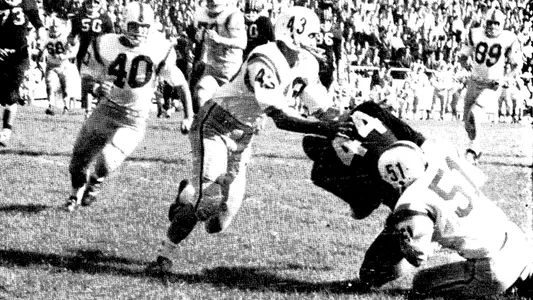
On Dec. 30, 1960, the Bulldogs faced Tennessee Tech in the 15th annual Tangerine Bowl in Orlando, Fla., marking the first and only bowl appearance in program history. Under head coach Eddie Teague, The Citadel delivered a commanding 27-0 victory over Tennessee Tech, securing a milestone that has lasted through the ages of football in the Lowcountry.
Nearly 66 years later, the two programs prepare to meet again, this time as Southern Conference opponents. With Tennessee Tech competing in its inaugural season as a member of the league, the Golden Eagles travel to Johnson Hagood Stadium on Saturday. The matchup provides an opportunity to revisit a historic achievement and recognize the players who helped shape the foundation of modern The Citadel football tradition.

A Season Worthy of Remembrance
For members of the 1960 team, the Tangerine Bowl represented much more than another football game; rather, it served as an opportunity to showcase The Citadel on a larger stage and reward a group of players whose dedication had elevated the program.
Ben Hill, a member of The Citadel's Class of 1963 and a sophomore during the 1960 season, remembers the excitement surrounding the program's first postseason invitation.
"When you work that hard and you do well, and then you get recognized by being invited to a bowl game, it's hard to put into words the excitement that existed throughout the team and throughout the school," Hill recalled.
During an era when postseason opportunities were considerably more limited than today, earning an invitation to the Tangerine Bowl carried considerable prestige. The game featured successful smaller-college programs and acted as an opportunity for The Citadel to demonstrate its competitiveness beyond the Southern Conference.
Tennessee Tech entered the matchup as the reigning Ohio Valley Conference champion, having completed a perfect 6-0 conference campaign. The Golden Eagles had also claimed a share of the conference championship in each of the previous two seasons, establishing themselves as one of the league's premier programs. Despite the challenge, the Bulldogs embraced the opportunity to compete on a larger stage.

A Dominant Performance in Orlando
The Citadel wasted little time establishing control of the contest, combining a productive offensive performance with a defense that kept Tennessee Tech off the scoreboard.
Quarterback Jerry Nettles, who was recognized as the game's most outstanding player, helped lead the Bulldogs' offensive attack with two touchdown passes, connecting with Bill Allen and Bill Gilgo.
The ground game also proved effective, with Tommy Edwards breaking free for a long touchdown run and Sid Mitchell adding a one-yard rushing score.
Edwards finished with 84 rushing yards on seven carries, while Early Eastburn contributed 78 yards on 16 attempts.
Defensively, The Citadel limited Tennessee Tech to just 71 rushing yards and 30 passing yards, according to a contemporary account published in The Brigadier, the college's student newspaper. The Bulldogs recorded 25 first downs compared to 11 for the Golden Eagles, controlling the game on both sides of the ball.
When the final whistle sounded, The Citadel had registered a 27-0 shutout and the program's first bowl victory, providing a fitting conclusion to a landmark season.
For Hill, the significance of the victory extended far beyond the final score.
"It meant a lot for recruiting because all of a sudden The Citadel became known throughout the South," Hill recalled. "That victory and the appearance in the bowl meant an awful lot to The Citadel."
The victory helped establish the Bulldogs as a competitive football program and provided valuable recognition for an institution competing against schools with larger enrollments and greater resources.

More Than Just a Game
Although the victory remains the defining achievement of the trip, the players also remember the experiences away from the football field.
The Orlando community welcomed the Bulldogs with activities organized by local officials and bowl representatives. Among those opportunities was a visit to a children's hospital, an experience both Ben Hill and Jack Katz recalled as particularly meaningful.
Katz, a sophomore on the 1960 team who played his final game for the Bulldogs in the Tangerine Bowl before transferring to the University of Florida, remembered learning about the charitable purpose behind the game and the impact it had on the participating players.
"I think it was the most sobering thing in the world," Katz recalled. "You could put a face on it. You could put a name on it."
Hill similarly remembered the hospital visit as one of several activities organized by the Orlando community that meant a great deal to the team.
Having attended high school in Key West, Fla., Katz also recalled a much smaller Orlando than the city known today. He remembered the hospitality extended to both teams, including an evening when players from The Citadel and Tennessee Tech engaged in a grapefruit fight during their downtime.
The Tangerine Bowl also marked the beginning of a personal milestone for Hill, who met his future wife, a native of nearby Winter Park, Fla., during the trip.
"We've only been married 63 years, so it worked out pretty well," Hill joked.
The experience remains a lasting reminder that the trip to Orlando represented far more than a postseason football game. It provided an opportunity for teammates to strengthen their bonds as brothers through shared experiences, creating friendships and memories that would extend well beyond their playing days.

A Legacy for the Ages
The success of the Tangerine Bowl team helped set the stage for another historic achievement the following season, as The Citadel captured the program's first Southern Conference championship in 1961 under head coach Eddie Teague.
Wade St. John, a member of The Citadel's Class of 1964, experienced the program's historic run from a different perspective. As a freshman quarterback during the 1960 season, St. John competed on the freshman team, as first-year players were not eligible for varsity competition at the time. He recalled the excitement surrounding the program, including a 1960 campaign that featured a scoreless tie against Florida State at Johnson Hagood Stadium.
"Most of the guys that won the Tangerine Bowl came back the next year, in the 1961 season, and we won the first Southern Conference championship in 1961," St. John recalled. "Those two seasons, '60 and '61, were pretty special for us."
Hill shared similar sentiments about the championship team, remembering its talent, leadership and the relationships developed among its players. He specifically praised quarterback Bill Whaley and standout end Charlie Brendle, while emphasizing the demanding nature of football during an era when players regularly contributed on both offense and defense.
"It was a special team for The Citadel at that time," Hill said.
More than six decades later, the legacy of those teams continues to extend beyond the football field, with former players working to preserve their accomplishments and support future generations of Bulldogs.
"We have now a fully endowed scholarship in the name of the Tangerine Bowl team," St. John said.
The Tangerine Bowl Team Scholarship, established in honor of the historic 1960 squad, serves as a lasting tribute to the players and their accomplishments. Supported through The Citadel Brigadier Foundation, the scholarship helps preserve the team's legacy while providing opportunities for future generations of Bulldog student-athletes.
That commitment to preserving the program's legacy is also shared by John Carlisle, a member of The Citadel's Class of 1964, who has remained actively involved in documenting football history. Alongside his wife, Carlisle helped organize a Tangerine Bowl reunion and has worked extensively to collect and digitize historical game footage through the Citadel Football Association.
"When I first became president of the football association, I started collecting film," Carlisle recalled. "We're at almost 700 games."
Through efforts such as the endowed scholarship, alumni reunions and the preservation of historical footage, former Bulldogs continue to ensure that the accomplishments of the Tangerine Bowl team remain an important part of The Citadel football tradition.
Beyond the victories and championships, the lasting legacy of those teams is reflected in the character, commitment and values of the men who represented The Citadel.
"They were all really good men that upheld all the values of The Citadel," Hill said.
Many of those relationships have endured long after the players completed their football careers, reflecting the bonds formed through their shared experiences as cadets and teammates.
That sense of brotherhood also remained with Katz long after his playing career. Although the Tangerine Bowl marked his final appearance for The Citadel before transferring to Florida, he continued to maintain a connection with the institution and his former classmates.
Katz recalled receiving an invitation to a Class of 1963 reunion years later in spite of the fact that he had never graduated from The Citadel. The response from a fellow alumnus was one he would remember for decades.
"'You're one of us for life. Now you just got to get used to it,'" Katz recalled.
Despite finishing his collegiate career at Florida and later establishing the Panama Jack brand, Katz continues to embrace both institutions.
"I'm a Gator. I'm a Bulldog," Katz said.
Now, as Tennessee Tech begins a new chapter as a member of the Southern Conference, the programs' upcoming meeting offers a connection between generations of college football.
The Bulldogs and Golden Eagles will meet Saturday at Johnson Hagood Stadium, bringing renewed attention to a matchup that helped define an important chapter in The Citadel football history. Saturday's game will also feature a special Tangerine Bowl recognition, providing an opportunity to honor the 1960 team and their place in program annals.
For The Citadel, the 1960 Tangerine Bowl remains more than a victory recorded in the history books. It represents a team that embraced an unprecedented opportunity, delivered on one of the program's biggest stages and left a legacy that continues to resonate more than six decades later.

On Dec. 30, 1960, the Bulldogs faced Tennessee Tech in the 15th annual Tangerine Bowl in Orlando, Fla., marking the first and only bowl appearance in program history. Under head coach Eddie Teague, The Citadel delivered a commanding 27-0 victory over Tennessee Tech, securing a milestone that has lasted through the ages of football in the Lowcountry.
Nearly 66 years later, the two programs prepare to meet again, this time as Southern Conference opponents. With Tennessee Tech competing in its inaugural season as a member of the league, the Golden Eagles travel to Johnson Hagood Stadium on Saturday. The matchup provides an opportunity to revisit a historic achievement and recognize the players who helped shape the foundation of modern The Citadel football tradition.
A Season Worthy of Remembrance
For members of the 1960 team, the Tangerine Bowl represented much more than another football game; rather, it served as an opportunity to showcase The Citadel on a larger stage and reward a group of players whose dedication had elevated the program.
Ben Hill, a member of The Citadel's Class of 1963 and a sophomore during the 1960 season, remembers the excitement surrounding the program's first postseason invitation.
"When you work that hard and you do well, and then you get recognized by being invited to a bowl game, it's hard to put into words the excitement that existed throughout the team and throughout the school," Hill recalled.
During an era when postseason opportunities were considerably more limited than today, earning an invitation to the Tangerine Bowl carried considerable prestige. The game featured successful smaller-college programs and acted as an opportunity for The Citadel to demonstrate its competitiveness beyond the Southern Conference.
Tennessee Tech entered the matchup as the reigning Ohio Valley Conference champion, having completed a perfect 6-0 conference campaign. The Golden Eagles had also claimed a share of the conference championship in each of the previous two seasons, establishing themselves as one of the league's premier programs. Despite the challenge, the Bulldogs embraced the opportunity to compete on a larger stage.
A Dominant Performance in Orlando
The Citadel wasted little time establishing control of the contest, combining a productive offensive performance with a defense that kept Tennessee Tech off the scoreboard.
Quarterback Jerry Nettles, who was recognized as the game's most outstanding player, helped lead the Bulldogs' offensive attack with two touchdown passes, connecting with Bill Allen and Bill Gilgo.
The ground game also proved effective, with Tommy Edwards breaking free for a long touchdown run and Sid Mitchell adding a one-yard rushing score.
Edwards finished with 84 rushing yards on seven carries, while Early Eastburn contributed 78 yards on 16 attempts.
Defensively, The Citadel limited Tennessee Tech to just 71 rushing yards and 30 passing yards, according to a contemporary account published in The Brigadier, the college's student newspaper. The Bulldogs recorded 25 first downs compared to 11 for the Golden Eagles, controlling the game on both sides of the ball.
When the final whistle sounded, The Citadel had registered a 27-0 shutout and the program's first bowl victory, providing a fitting conclusion to a landmark season.
For Hill, the significance of the victory extended far beyond the final score.
"It meant a lot for recruiting because all of a sudden The Citadel became known throughout the South," Hill recalled. "That victory and the appearance in the bowl meant an awful lot to The Citadel."
The victory helped establish the Bulldogs as a competitive football program and provided valuable recognition for an institution competing against schools with larger enrollments and greater resources.
More Than Just a Game
Although the victory remains the defining achievement of the trip, the players also remember the experiences away from the football field.
The Orlando community welcomed the Bulldogs with activities organized by local officials and bowl representatives. Among those opportunities was a visit to a children's hospital, an experience both Ben Hill and Jack Katz recalled as particularly meaningful.
Katz, a sophomore on the 1960 team who played his final game for the Bulldogs in the Tangerine Bowl before transferring to the University of Florida, remembered learning about the charitable purpose behind the game and the impact it had on the participating players.
"I think it was the most sobering thing in the world," Katz recalled. "You could put a face on it. You could put a name on it."
Hill similarly remembered the hospital visit as one of several activities organized by the Orlando community that meant a great deal to the team.
Having attended high school in Key West, Fla., Katz also recalled a much smaller Orlando than the city known today. He remembered the hospitality extended to both teams, including an evening when players from The Citadel and Tennessee Tech engaged in a grapefruit fight during their downtime.
The Tangerine Bowl also marked the beginning of a personal milestone for Hill, who met his future wife, a native of nearby Winter Park, Fla., during the trip.
"We've only been married 63 years, so it worked out pretty well," Hill joked.
The experience remains a lasting reminder that the trip to Orlando represented far more than a postseason football game. It provided an opportunity for teammates to strengthen their bonds as brothers through shared experiences, creating friendships and memories that would extend well beyond their playing days.
A Legacy for the Ages
The success of the Tangerine Bowl team helped set the stage for another historic achievement the following season, as The Citadel captured the program's first Southern Conference championship in 1961 under head coach Eddie Teague.
Wade St. John, a member of The Citadel's Class of 1964, experienced the program's historic run from a different perspective. As a freshman quarterback during the 1960 season, St. John competed on the freshman team, as first-year players were not eligible for varsity competition at the time. He recalled the excitement surrounding the program, including a 1960 campaign that featured a scoreless tie against Florida State at Johnson Hagood Stadium.
"Most of the guys that won the Tangerine Bowl came back the next year, in the 1961 season, and we won the first Southern Conference championship in 1961," St. John recalled. "Those two seasons, '60 and '61, were pretty special for us."
Hill shared similar sentiments about the championship team, remembering its talent, leadership and the relationships developed among its players. He specifically praised quarterback Bill Whaley and standout end Charlie Brendle, while emphasizing the demanding nature of football during an era when players regularly contributed on both offense and defense.
"It was a special team for The Citadel at that time," Hill said.
More than six decades later, the legacy of those teams continues to extend beyond the football field, with former players working to preserve their accomplishments and support future generations of Bulldogs.
"We have now a fully endowed scholarship in the name of the Tangerine Bowl team," St. John said.
The Tangerine Bowl Team Scholarship, established in honor of the historic 1960 squad, serves as a lasting tribute to the players and their accomplishments. Supported through The Citadel Brigadier Foundation, the scholarship helps preserve the team's legacy while providing opportunities for future generations of Bulldog student-athletes.
That commitment to preserving the program's legacy is also shared by John Carlisle, a member of The Citadel's Class of 1964, who has remained actively involved in documenting football history. Alongside his wife, Carlisle helped organize a Tangerine Bowl reunion and has worked extensively to collect and digitize historical game footage through the Citadel Football Association.
"When I first became president of the football association, I started collecting film," Carlisle recalled. "We're at almost 700 games."
Through efforts such as the endowed scholarship, alumni reunions and the preservation of historical footage, former Bulldogs continue to ensure that the accomplishments of the Tangerine Bowl team remain an important part of The Citadel football tradition.
Beyond the victories and championships, the lasting legacy of those teams is reflected in the character, commitment and values of the men who represented The Citadel.
"They were all really good men that upheld all the values of The Citadel," Hill said.
Many of those relationships have endured long after the players completed their football careers, reflecting the bonds formed through their shared experiences as cadets and teammates.
That sense of brotherhood also remained with Katz long after his playing career. Although the Tangerine Bowl marked his final appearance for The Citadel before transferring to Florida, he continued to maintain a connection with the institution and his former classmates.
Katz recalled receiving an invitation to a Class of 1963 reunion years later in spite of the fact that he had never graduated from The Citadel. The response from a fellow alumnus was one he would remember for decades.
"'You're one of us for life. Now you just got to get used to it,'" Katz recalled.
Despite finishing his collegiate career at Florida and later establishing the Panama Jack brand, Katz continues to embrace both institutions.
"I'm a Gator. I'm a Bulldog," Katz said.
Now, as Tennessee Tech begins a new chapter as a member of the Southern Conference, the programs' upcoming meeting offers a connection between generations of college football.
The Bulldogs and Golden Eagles will meet Saturday at Johnson Hagood Stadium, bringing renewed attention to a matchup that helped define an important chapter in The Citadel football history. Saturday's game will also feature a special Tangerine Bowl recognition, providing an opportunity to honor the 1960 team and their place in program annals.
For The Citadel, the 1960 Tangerine Bowl remains more than a victory recorded in the history books. It represents a team that embraced an unprecedented opportunity, delivered on one of the program's biggest stages and left a legacy that continues to resonate more than six decades later.
-- #FireThoseCannons --


Monday, October 19
Monday, October 12
Monday, October 05
Monday, September 28